
A gentler way to understand grief
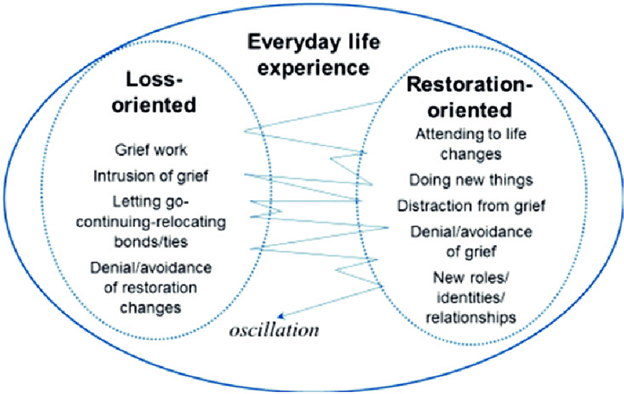
One of the hardest things about grief is the feeling that there is a right way to do it. The Stroebe and Schut Dual Process Model offers a kinder idea. It says people often move back and forth between two kinds of coping, rather than working through everything in a neat, straight line. That back and forth pattern is what makes the model so relatable for many people.
What oscillation really means
In the model, one side is loss oriented coping. That is the part of grief that sits with the ache, the memories, the questions and the emotional weight of what has happened. The other side is restoration oriented coping. That is where attention shifts towards everyday life, practical changes, new routines, responsibilities and the effort of figuring out how to keep going. The model suggests both are needed, and that movement between them is part of healthy coping.
Why this matters on difficult days
This is one reason the model can feel so reassuring. A person might wake up one morning feeling completely consumed by emotion, then later find themselves sorting school bags, answering emails or making tea as though life has asked them to carry on as normal. That does not mean they are avoiding their pain. It simply reflects how coping often works in real life, with attention shifting between feeling and functioning.
For people living with a traumatic loss, that movement can be even more noticeable. Some days are more about sitting with the reality of what has happened. Other days are about getting through the practical side of life, one small task at a time. The model gives space for both, which can reduce the pressure to perform grief in one fixed way.
Why the model feels so helpful in real life
What makes this model so powerful is that it does not ask anyone to choose between memory and forward movement. It allows room for both. You can still carry love, still miss someone deeply, and still handle the ordinary parts of a day. You can still step away from difficult feelings for a while and come back to them later. That ebb and flow is not failure. It is part of the human response to loss.
For many people, that kind of understanding is a relief. It can soften the guilt that comes with having a good moment, or the frustration that comes with suddenly feeling overwhelmed again. The model reminds us that healing does not mean forgetting, and it does not mean staying in one emotional place. It means learning to live with the movement.
A final thought
This is why the dual process model still matters. It gives language to something many people already feel but do not always know how to explain. Some days are about loss. Some days are about rebuilding. Most days are a bit of both. And that is perfectly okay.
If you would like to understand this more and learn how to integrate this understanding into your everyday life come along to one of our suicide grief retreats where we discuss your patterns and apply them to these models. EMDR GRIEF RETREATS – Suicide Grief Support